


As Canadian families leave big cities in search of affordable living, housing policy continues to rely on simple bedroom counts rather than how homes actually function for kids. Drawing on a poll of 4,000 Canadians and child development research, Mike Moffatt and Sabrina Maddeaux evaluate whether housing types from suburban houses to high-rise towers truly serve families. They introduce the "kitchen window test" to show why immediate green space matters for child development, and explain why family-friendly European-style courtyard apartments remain effectively illegal under Canadian building codes.
In this episode of Classonomics, Sabrina Maddeaux and Mike Moffatt break down what actually makes a home “family-friendly,” why the federal government's three-bedroom standard falls short, and what a survey of 4,000 Canadians reveals about whether townhomes, strawberry-box bungalows, and apartment towers are truly fit for raising kids. They unpack the developmental science behind childhood outcomes, introduce the “kitchen window test” for fostering independent play, and explain why the family-friendly courtyard apartments popular across Europe remain effectively illegal to build under Canadian zoning and building codes.
If you enjoy the show and would like to support our work, please consider subscribing to our YouTube channel. The pod is also available on various audio-only platforms, including:
Below is an AI-generated transcript of the Missing Middle podcast, lightly edited.
Mike Moffatt: Canadian families with young children and families planning to have children are leaving big cities in record numbers and moving to smaller communities, often looking for a family-friendly home that they can afford.
Sabrina Maddeaux: But what exactly is a family-friendly home? Does it have to be a large detached home in the suburbs, with a white picket fence and a two-car garage? Or is it any home that has enough bedrooms? What types of homes work and don’t work for middle-class families with kids?
Mike Moffatt: That’s what we’re going to talk about today. We’re going to look at the results of a recent poll commissioned by the Homes and Growth Coalition on the types of homes Canadians believe are appropriate for children, as well as the research on what types of homes kids need to thrive, and we’ll also discuss the kitchen window test of a child-friendly home.
Sabrina Maddeaux: Mike, you often use the terms family-friendly home and child-friendly home in your reports, but how do you determine what is a family-friendly home?
Mike Moffatt: I have to admit, what we do today has actually been embarrassingly basic.
We adopted something that the federal government calls the national occupancy standard. What that does is set the minimum number of bedrooms a family should have, based on the age and gender and the relationships of the people in the family.
Now, that doesn’t mean that we assume every child needs to have their own bedroom. It’s a bit more complicated than that, but when we look at any individual family, we use the national occupancy standard as our baseline for what is a family-friendly home. Really, we’re just defining it by the number of bedrooms.
When we’re thinking about families with children, in general, we use an even more basic definition: we define a child-friendly home as one having to three bedrooms.
But why three? We chose that number because under the national occupancy standard, any combination of family members that doesn’t involve aunts and uncles or multigenerational families—if you have a parent or single parent with two kids—they will definitely fit within that standard. So really, we just use it as a synonym for a three-bedroom home.
Sabrina Maddeaux: To me, that definition is probably much too basic because there are all kinds of things you’re not taking into consideration, including the size of the home, the type of the home, its location, green space, even its layout. There are so many other factors, and I know this from my rental searches over the years.
Not that I have kids at the moment, but you see things advertised that might be two-bedroom or three-bedroom, whether they’re in a condo, a townhome, or a detached home. And when you get there, what that actually means in terms of how it could even be a quality home for two people, let alone a child or multiple children, can vary greatly. So I think there are so many other factors at play.
Any parent or parent-to-be that I know would also have a longer list of requirements beyond just the number of bedrooms.
Mike Moffatt: It’s funny, every time we issue one of these reports, we get that criticism that what you’re doing, defining a child-friendly home, is far too basic. And all I can say is I agree; I totally agree.
One of the things I could do is start adding different layers on top of that. But the problem with that is I’m imposing my own biases—as a Gen-X white guy—of what a family-friendly home should be. So instead of me coming up with it, maybe we should ask Canadians what they want and get them to define it.
We commissioned a poll. Specifically, the Missing Middle Initiative, where we work, is part of something called the Homes and Growth Coalition. And that’s a group of organizations dedicated to developing solutions to Canada’s middle-class housing crisis.
The coalition recently had one of the partners of the coalition, Data Sciences, Inc., a research firm out of Montreal, poll over 4,000 Canadians and ask them a series of questions related to housing.
Most of the questions had nothing to do with this family-friendly, child-friendly definition. It was a very big poll, but one of the questions we asked, we showed a picture of a home and we asked the respondent:
“How suitable would this kind of home be for a couple with two young children?”
And the 4,000 Canadians who completed the poll were allowed to say if that home would be “suitable”, or it’s “not suitable.” But we also gave them a third option that said: “workable but not ideal”. It’s not great, but it’s not horrible either.
So Sabrina, as far as I’m aware, you weren’t one of the 4,000 Canadians that we called to participate in this. So I thought it’d be interesting to get your response to each of our homes and see how you would have answered these questions:
Suitable, workable but not ideal, or not suitable for a young couple with kids. Because I’m curious how aligned you are with the other Canadians.
Sabrina Maddeaux: Yeah, this sounds great. I’m in.
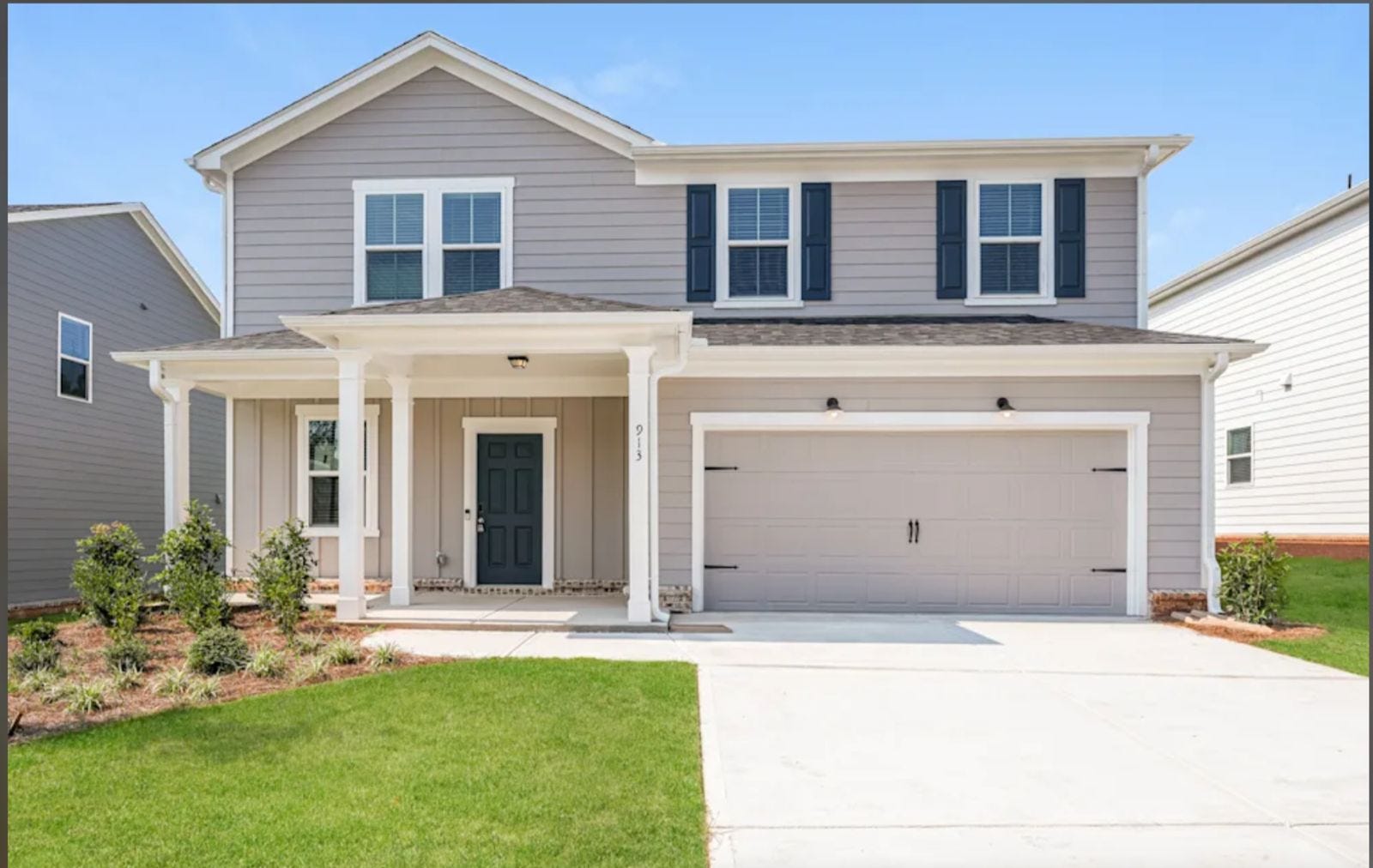
Mike Moffatt: Our first home here is a new two-storey detached home in the suburbs. There’s no white picket fence here, but I think it’s the kind of thing that a lot of families might think of as being a typical family home. So I’m going to ask you: is a home like this suitable, workable but not ideal, or not suitable for this family? And I’d also like you to walk through your thinking here: why did you pick the answer that you picked?
Sabrina Maddeaux: I suspect this might be one of the easier options. I’m going to very quickly say suitable. New two-storey detached homes, especially in the suburbs, tend to have a larger square footage. We know that they most likely also have their own private backyard. In the suburbs, you have access to services, schools, community centres, and often parks as well. So I would say very suitable.
In fact, this is probably what your average Canadian or young person dreams of when they think about owning a home where they’ll raise their children.
Mike Moffatt: Yeah, absolutely. And you are with the consensus here. 89% of Canadians said this is a suitable home for this family. Most of the rest said it was workable but not ideal, with only a tiny sliver saying it’s not suitable. Unfortunately, our poll didn’t ask respondents why they chose what they chose. They were just required to answer one of these three categories.
So we really can’t be sure what the 11% who did not choose suitable were thinking. But if you polled Canadians, 11% of Canadians would say that Elvis is still alive. I think you always have to expect that contrarian minority. Everybody’s agreed here that this is a suitable home.
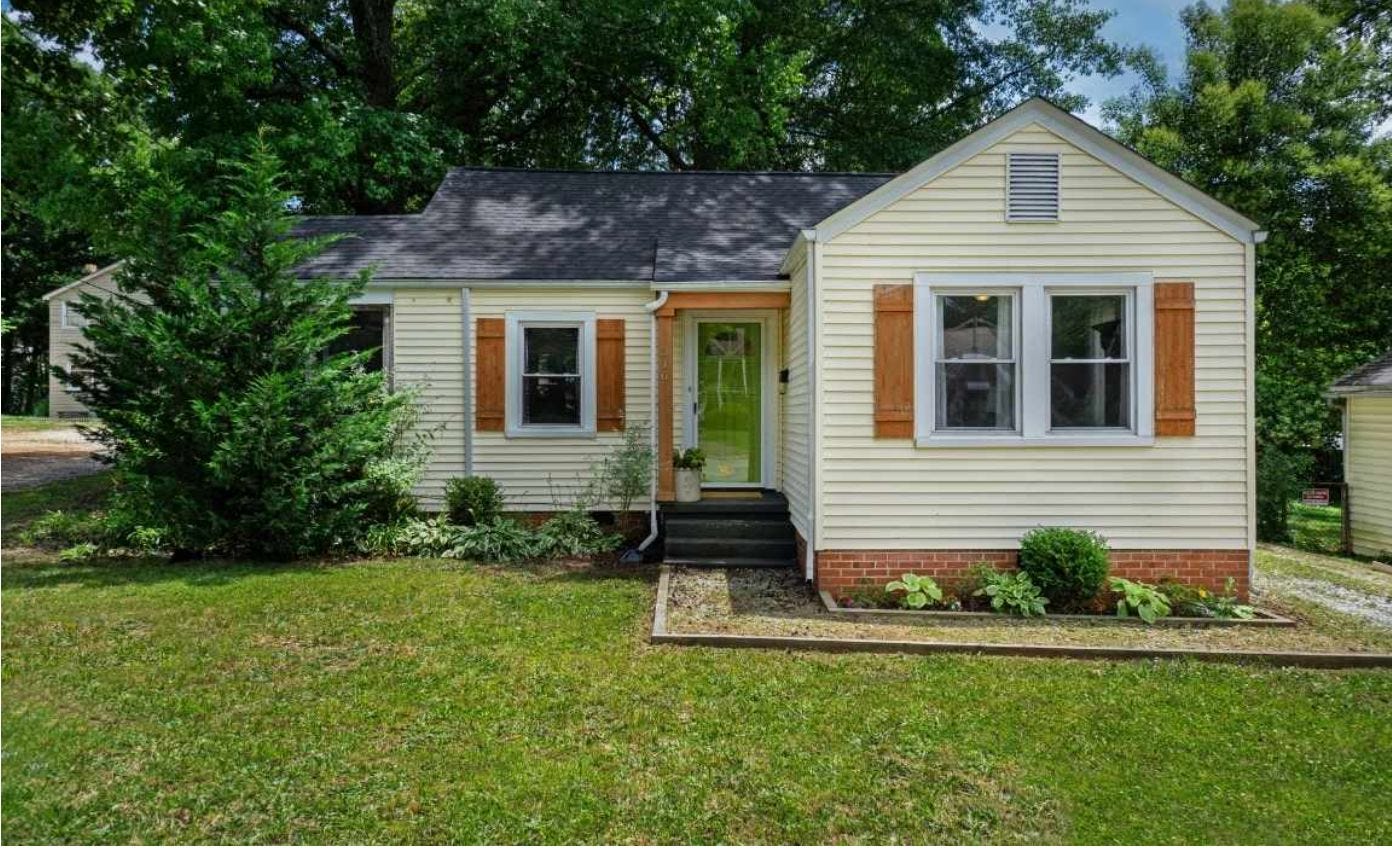
Let’s move on to our next one. This one is an older, smaller single-storey detached home. Think of those old strawberry box homes from the 1950s—single-storey, maybe 900 to 1,000 square feet or so. Would you say this is suitable, workable but not ideal, or not suitable?
Sabrina Maddeaux: I’d say suitable with a few caveats. Certainly, if you have a smaller family—one child, maybe two—but if you go beyond that, it probably becomes a bit more difficult, or even not suitable. It also would depend on the number of bedrooms and layout. But a lot of these homes do have their own private outdoor space. They’re near a lot of amenities and schools. There are a lot of these, even in the city, that are actually very, very expensive, despite all the reports of falling home prices. So I would lean towards suitable.
Mike Moffatt: Absolutely. We only gave respondents so much information, so they couldn’t see layouts or anything like that.
But based on the picture, most Canadians agree with you that they see this home as suitable. That proportion dropped to 68%, so not quite as overwhelming. Another 24% chose workable, but not ideal. We didn’t ask why. My guess would be that maybe they see it as too small. But for the most part, I think we can put this one in the family home category.
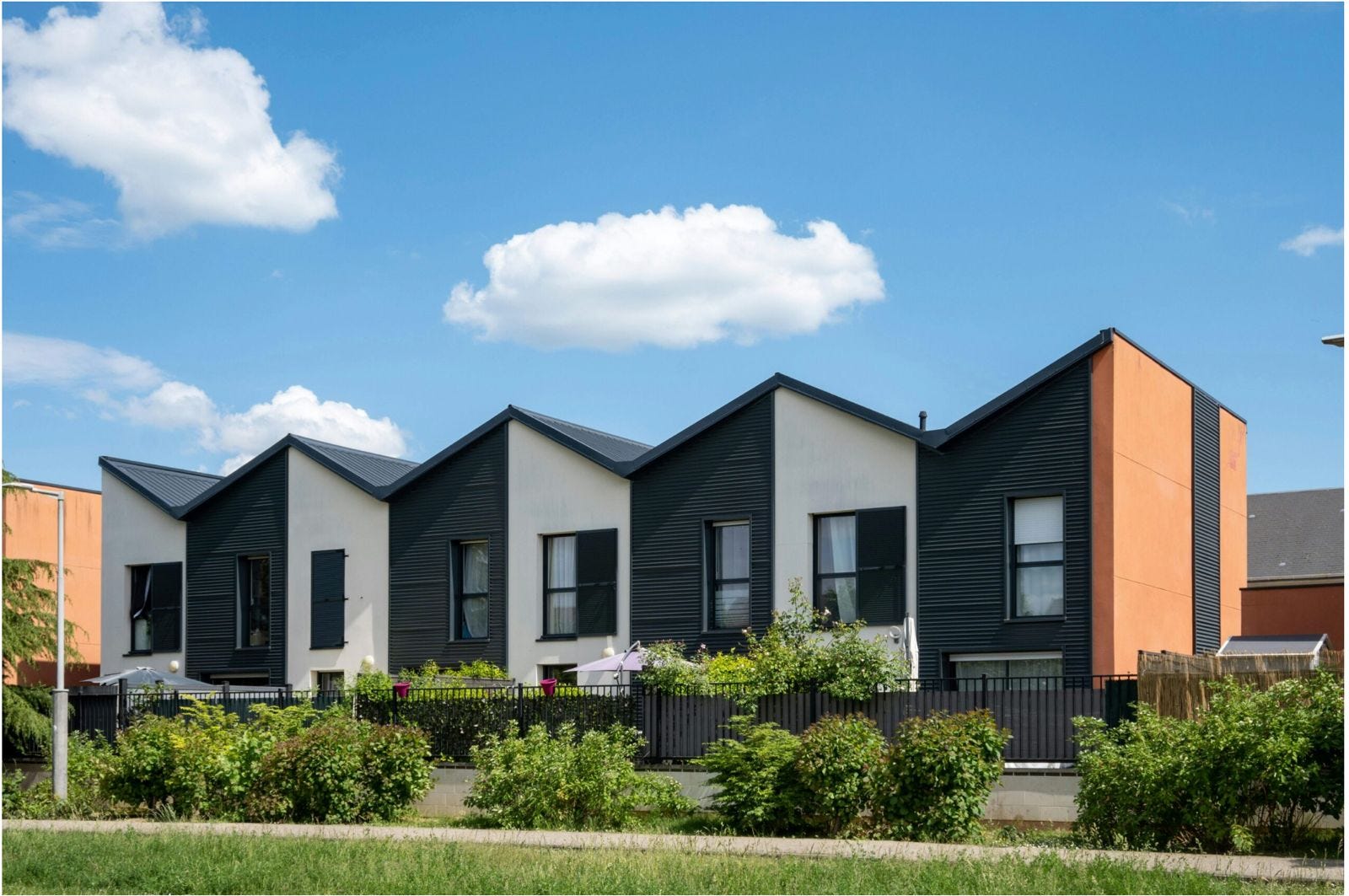
Now, the next one: it’s a modern but small, tall and skinny row home, so like a townhome, but a little bit on the smaller side, and it’s quite narrow and tall.
Would you see this as suitable, workable but not ideal, or not workable?
Sabrina Maddeaux: I’m going to put this one in the workable but not ideal category. I’ve seen quite a few of these, and they are sometimes getting taller, but also very, very skinny with a lot of stairs. And they’re not always designed in very child-friendly ways. So again, a lot depends, but I’ll go with workable but not ideal. You could probably make it work, but it wouldn’t be a perfect situation.
Mike Moffatt: A lot of Canadians agree with you on that. I would say that the most common option was still suitable, but it was only 49%. 17% chose not suitable, with the rest—about a third of respondents—giving the same answer as you, saying you can make it work, but it might not be ideal.
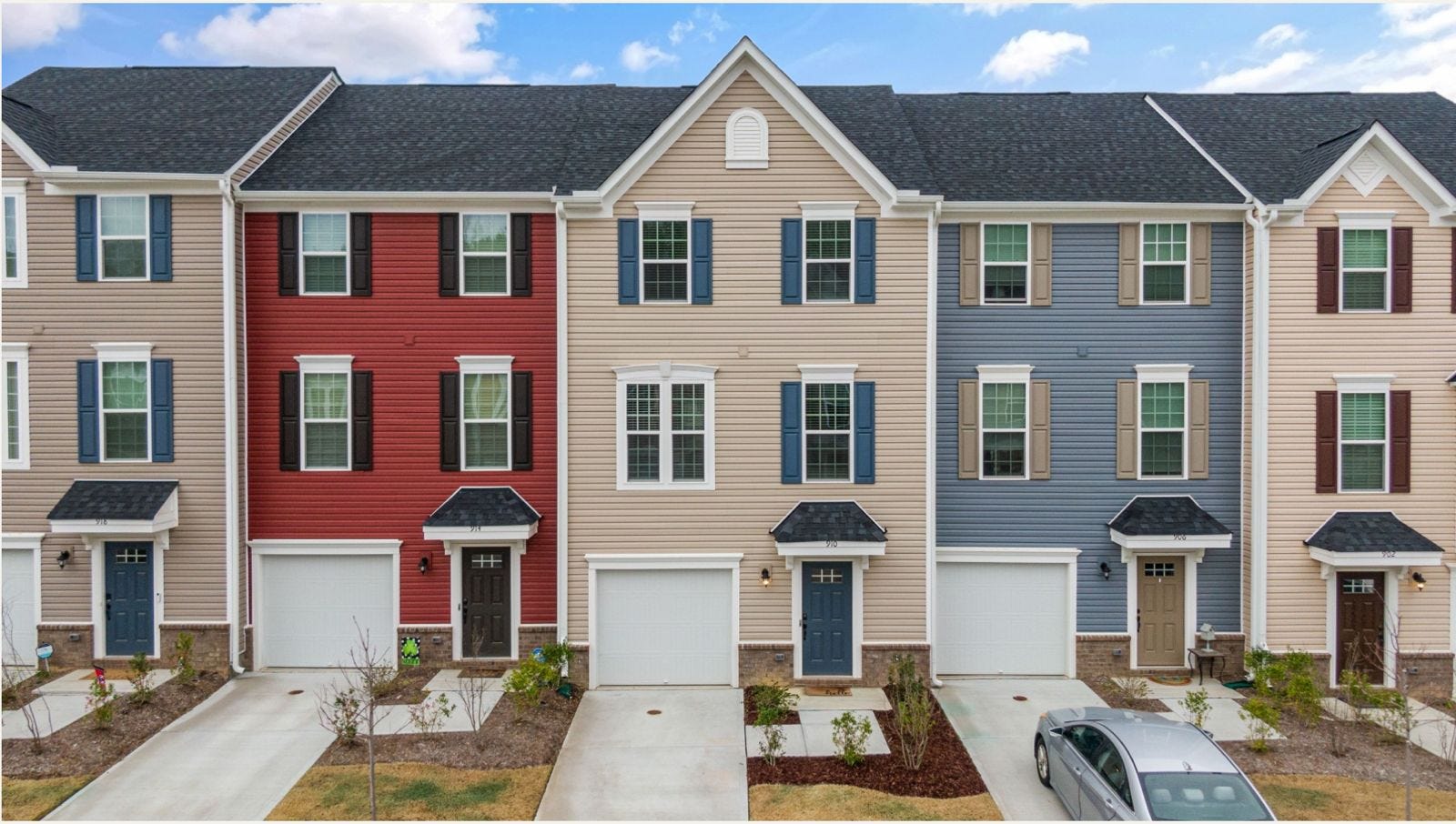
Let’s go to the next one. Also a townhome, a row home, but more of a traditional one that you might have seen in the ‘70s and ‘80s. It’s larger, wider, not as tall. Again, suitable, workable but not ideal, or not workable?
Sabrina Maddeaux: I’ll go back to suitable for this one because of the fact that these older row homes are larger; they’re wider. They just have more space.
Mike Moffatt: The answers there are nearly identical to the strawberry box home. And I would imagine people answered the same way on both: 61% chose suitable, 30% chose workable, so less than 10% put it in the not suitable category. So I think we can count this one as a family-friendly home.
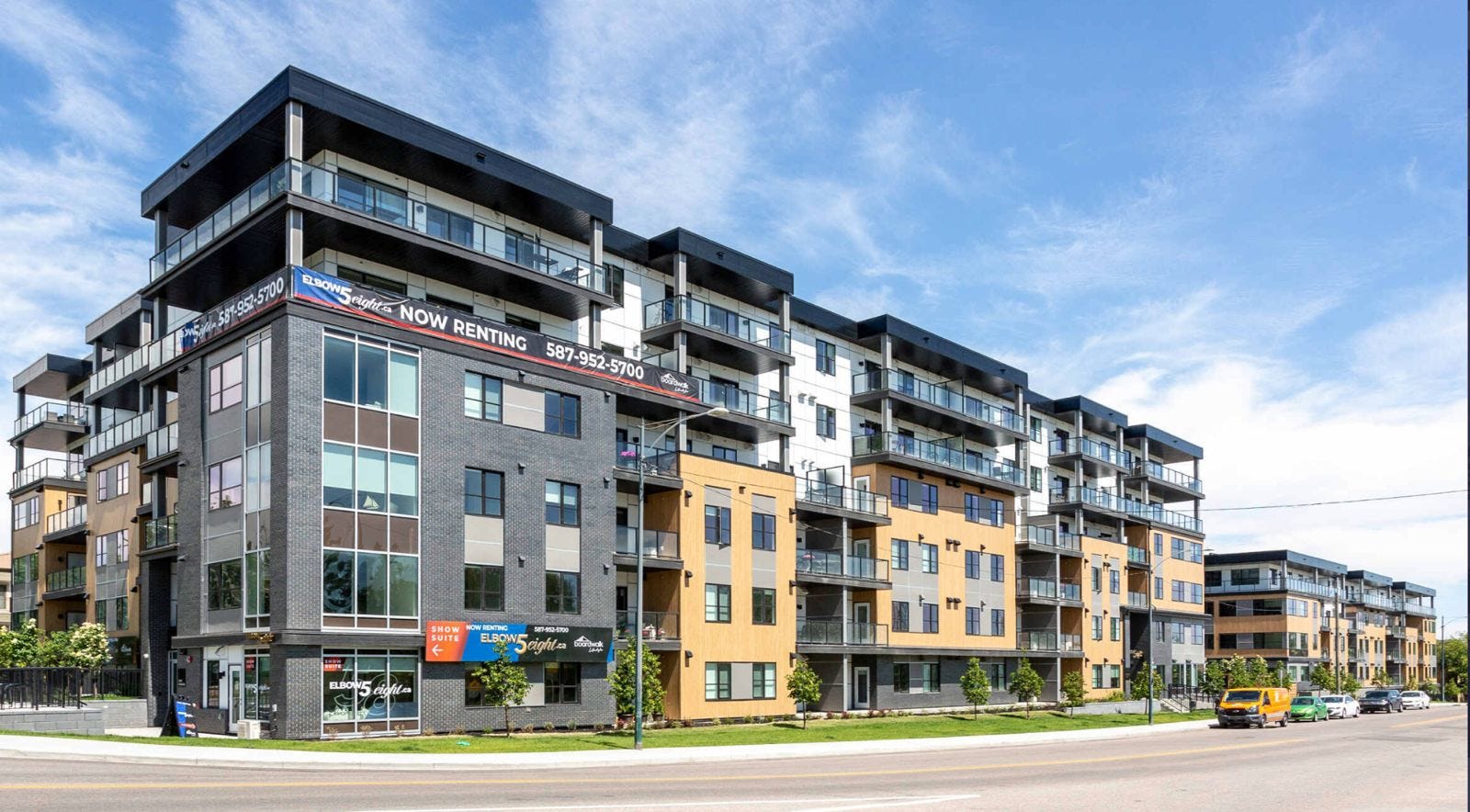
Now it’s going to get a little bit more challenging. It’s a unit in a low-rise, six-storey apartment building, which we’re seeing a lot of cities want to put on arterial roads. To be clear, we didn’t say what kind of road this was on. But this has become a popular housing type.
In particular, this is one where there’s ground-floor retail, and then five stories of apartments. Would you put this as suitable, workable but not ideal, or not workable?
Sabrina Maddeaux: I happen to live in a unit in a low-rise, five-storey apartment building, so I’m very familiar with this. I would go with workable but not ideal. A lot of that depends on unit type. If you’re in a building that has older units that are larger, that have better layouts, and you can get a two- or three-bedroom or a two-plus-den, you can make that work, maybe with a very young child and a younger family, as you’re trying to upgrade to one of the other types of homes we talked about.
The reality also is that a lot of these are still one-bedrooms or small two-bedrooms. They do tend to be on busy arteries, and obviously you’re not going to have a private backyard or outdoor space, especially with that ground-floor retail detail you mentioned.
Mike Moffatt: I think that’s important here because they weren’t able to see the types of roads it’s on; they don’t know the unit size.
I think out of all of them, this was the most difficult one for folks. The results were split down the middle: 30% said suitable, 28% said unsuitable, and just over 40% were in the middle. This one may or may not be classified as family-friendly. I think it’s one where all of those other details matter.
Now, interestingly, we also asked respondents about other family types. We weren’t just asking around young couples with two kids. One of the other questions we asked was, what if it’s a young couple with no kids? 75% of Canadians said that this would be suitable for that couple. So clearly respondents weren’t thinking that the adults couldn’t live there; they’re worried about whether this makes sense for kids.
Canadians overwhelmingly think these are good units, but they’re going, “I don’t know if they’re for everyone.”
Sabrina Maddeaux: Yeah, and I would reflect that in my own experience. Great building, love it, great as a couple especially. We do have a unit that’s a bit on the larger side, especially for working from home sometimes, but certainly if and when a kid were to come into the equation, that’s when we would have to look elsewhere.
Mike Moffatt: I suspect a lot of Canadians are in that boat. And I think it might be a lot of those “drive until you qualify” families who end up leaving Toronto and moving somewhere else.
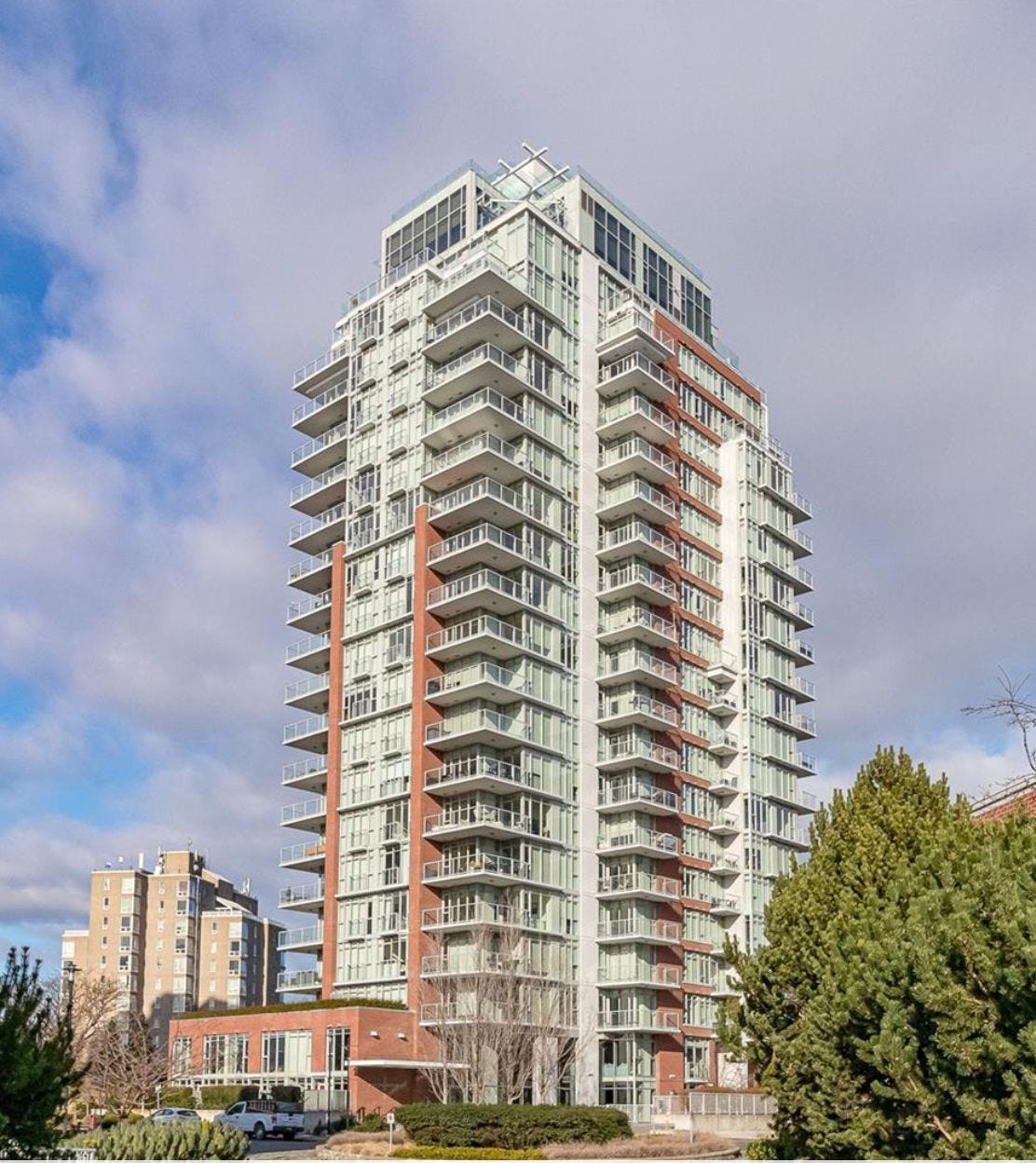
Now, finally, our last home: an apartment unit in a high-rise tower.
Sabrina Maddeaux: I’m going to say not suitable for the first time, unless it was a luxury penthouse situation that 1% or less than 1% of the population can afford. These apartments tend to be very small, with bad layouts, really geared at either investors or, best-case scenario, young single end-users. They’re in the most crowded areas, don’t have a lot of access to schools a lot of the time, and have no private outdoor space. Getting down on elevators, if they’re working, is a nightmare. So not ideal for kids.
Mike Moffatt: Yeah, and Canadians are clear on this one.
Again, we didn’t give them that many details. So maybe if it’s the apartment from Diff’rent Strokes—a great Gen X reference there—maybe that one’s okay, but with some of these smaller ones, I think Canadians are in agreement with you. Only 22% stated that it is suitable, but also only 34% said not suitable.
So the vast majority of people here, or I guess a plurality of people here, are saying you could probably make it work, but it’s not great. Out of all the housing types we’ve gone through, I think the first four, we could say are family-friendly for the most part. The fifth one, people are on the fence. The sixth one, they go, maybe not so much overall.
Through this exercise, what would you then define as the features of a family-friendly home?
Sabrina Maddeaux: I think space and number of bedrooms are the key factors. But on top of that, I found myself, when I was answering, talking about location, talking about outdoor space, in particular private outdoor space, a lot. So that got me thinking that that is something maybe even more important than is traditionally thought about when we talk about planning or what’s ideal for a family.
Now, your poll tested what average Canadians think is needed in a home. But I’m also curious: do any of these things actually matter to the well-being of a child, or are these just more luxury beliefs and preferences?
Mike Moffatt: It’s a great question because we’re asking everyday Canadians what they think kids need. But does that line up with the science? It turns out, I think it does, or largely does.
The science is a little bit tricky here, because if you simply test the outcomes that kids have based on the type of home they live in, kids who grow up in a single-family home across the board have better outcomes on average in childhood and adulthood.
They’re happier kids, they have less aggression, they’re less likely to go to prison, they make more money in adulthood, and so on. But the thing is, very little of that actually has to do with the house itself, the structure of the house.
It’s more of these confounding factors, because if you grow up in a single-detached home, you’re more likely to have parents with stable incomes, you’re less likely to miss meals, you’re more likely to live with both of your parents, and so on.
So it correlates more with things like income than the type of home. But you can control for all of those factors. You can go, okay, if we control for income, we control for this, control for that, does the structure of the home matter? And it turns out most of those factors wash away at that point when you control for income and family type and so on, but not all of it. Some things matter.
In particular, there is one study out of Scotland—and we looked at a lot of studies here, including a meta-study that examined over 100 studies—that found that young children who have a home next to green space, like a side yard or backyard, have better outcomes than those who do not, even when you control for everything else.
So it does turn out that there are some things that help kids on average thrive, and one of them is having green space that’s easily accessible.
Sabrina Maddeaux: Yeah, so that seems to line up with my instinct to talk about whether it’s private green space or at least access to green space. And certainly I think that’s become much more limited and much more of a luxury for families, especially over the last decade.
Mike Moffatt: It really is, and that’s a problem. Sometimes we try and correct for that by making sure that there’s a park nearby and so on, and that matters. That particularly helps older kids. But for kids in their formative years, like three-, four-, five-, six-year-olds, having a park nearby is great, but it’s not enough.
If the child is dependent on a caregiver to take them there, they’re unlikely to get the necessary level of outdoor time, because parents are simply too busy, caregivers are too busy, so they end up spending too much time indoors, too much iPad time. And it’s not necessarily good for their well-being.
Sabrina Maddeaux: That’s really interesting and makes sense that outdoor time would need to be much more scheduled, limited, and planned, and really based around the availability of parents who are often working more than ever as well. And I think also in today’s day and age, there’s a lot more social hesitancy to allow even older kids to go out on the streets or to the park. You’re a Gen X-er; I hear all the Gen X stories about riding their bikes until the sun came down, and then they came back in for dinner. That started to change even when I was growing up.
But certainly parents are even less comfortable with that level of freedom and lack of supervision now. So kids who don’t have access to that private space where their parents can just see them probably are experiencing a lot more screen time and a lot less outdoor time.
Now you wrote about some of this in a recent Globe and Mail article and called it the “kitchen window test.” Can you tell me more about that?
Mike Moffatt: The kitchen window test is a test of green space.
The idea behind it is that you’re testing whether or not a child could play outside and be seen and ideally communicated with from a kitchen window. Because if you can, parents are going to allow that child to play outside semi-independently.
And that level of semi-independence gives a young child the opportunity to play outside, either by themselves or with a sibling, with friends, and so on, without requiring a caregiver to take them somewhere. So they can go out, play in the sandbox, and what have you.
They can use their imaginations, get a little bit of sunshine, and that kind of thing. That doesn’t have to be done in a scheduled way, and the parent can still be keeping an eye on them while making dinner or that kind of thing.
Sabrina Maddeaux: So is the message, then, that children need a backyard and a fence, white picket or otherwise, to thrive?
Mike Moffatt: Well, they definitely don’t need a white picket fence. But no, not exactly that. People interpret something like the kitchen window test as saying, okay, we have to have a 1950s or even a 1980s-type suburb. And that’s not true at all; this green space can come in a variety of forms. Side yards are one, but it could also be a townhome that backs onto a shared green space.
And it could also be apartments, particularly forms of apartments that are rare in Canada.
There’s a thing called a European-style courtyard apartment, where it’s basically like a townhome, but more apartment-style, and it’s shaped like a big square with an open section in the middle. Kids can play in that open section. It has green space, and not only can they play, but they actually have opportunities to play with other kids, so it’s a little bit less isolating.
Things like that pass the kitchen window test because you could be on the second or third floor, see your kid outside while you could be making dinner, making coffee, or whatever, and keep an eye on them. If you have a voice like mine, you can yell down to them: “Hey, put that stick down!” Still, give them a certain level of independence.
None of this requires a traditional backyard. None of this requires a detached home or a 1950s or 1980s-style suburb, but it does require a certain level of green space that is proximate to the home.
Sabrina Maddeaux: That’s interesting, because one other thing I was thinking about when you were running through the list earlier, especially when you got to the low-rise apartment buildings and even the high-rise apartment buildings, is that my answers were very specific to how those exist in Canada.
Had you asked me the same question generally around the world, I would have said suitable or, at the very least, workable, but not ideal in most cases.
If you look to examples in Europe or even Asia, there are very suitable and often common, much more affordable apartments, whether they’re low-rise or high-rise, to raise kids in. That courtyard space is a big deal, for sure.
So that leads me to ask: is it even possible to build these types of homes in our cities at a price that Canadian families can afford?
Mike Moffatt: It could be. Obviously, it’s a little bit more challenging in Toronto or Vancouver than in other cities, but it’s certainly possible. The Europeans do it, after all. They do it in countries—oftentimes people say the only reason it works in Europe is that they have high levels of social housing. But that’s not true. There are countries in Europe that have lower levels of social housing than Canada. Germany, Portugal, Luxembourg, Spain—all of those countries have affordable, or at least attainable, courtyard apartment homes that are suitable for kids. Kids thrive in them. So that raises an obvious question: why don’t we build them here?
The simple answer is because it’s illegal to build family-friendly courtyard apartments, at least in the European style. It violates the building code; it violates elevator standards; it’s often not compliant with zoning. Even if you could build it, things like development charges make it prohibitively expensive. So government has gotten in the way of this. It’s not greedy developers or this or that; it’s that we’ve made it impossible and illegal to build the types of homes that European kids thrive in.
This is a fixable problem, but it requires our policymakers to look at what’s going on and follow the wise words of Helen Lovejoy from The Simpsons: “Please, think of the children.”
Sabrina Maddeaux: Yeah, and even the children that aren’t being born because a lot of would-be parents who would like to have children think, “I don’t have a suitable space, or I can’t afford a suitable space with access to green space and many other factors to have kids.” Canada’s population numbers have been in the headlines a lot recently, especially with discussions around immigration.
I always think, okay, we want to grow our population. We could probably do a lot more of that at home, but it would require politicians to make maybe some harder decisions about what they’re going to allow in terms of development and family-friendly housing, rather than just using immigration numbers.
Mike Moffatt: Absolutely. I do think we need to be looking at ways to make it easier for Canadians to have families. A lot of times, governments are getting in their own way and making it more difficult and more expensive for families to have kids. And these are fixable problems. We just need the political will to actually fix them.
Sabrina Maddeaux: Thank you, everyone, for watching and listening, and to our producer, Meredith Martin, and our editor, Sean Forman.
Mike Moffatt: And if you have any thoughts or questions about Diff’rent Strokes or the career of Gary Coleman, please leave us a comment and we’ll keep the conversation going there.
Sabrina Maddeaux: And we’ll see you next time.
Additional Reading/Listening that Helped Inform the Episode:
Funded by the Neptis Foundation
Brought to you by the Missing Middle Initiative