


For Canada Day, the Missing Middle team takes a break from discussing the country’s challenges to reflect on what gives them hope about Canada’s future.
From housing reforms and accessible education to immigration, community, environmental spaces, and a uniquely Canadian sense of humour, the conversation highlights the people, values, and progress that continue to inspire optimism.
If you enjoy the show and would like to support our work, please consider subscribing to our YouTube channel. The pod is also available on various audio-only platforms, including:
Below is an AI-generated transcript of the Missing Middle podcast, lightly edited.
Mike Moffatt: Happy Canada Day, everyone!
Sabrina Maddeaux: Happy Canada Day!
Today we’re doing something a little different. We often spend a lot of time on the show talking about the country’s challenges, but since it’s Canada Day, we’re taking a moment to focus on what makes Canada great and what’s making us feel optimistic about the country.
Mike Moffatt: You’ll be hearing from the whole team, and we’d also love to hear from you. Tell us in the comments what you love about Canada and what’s making you feel hopeful.
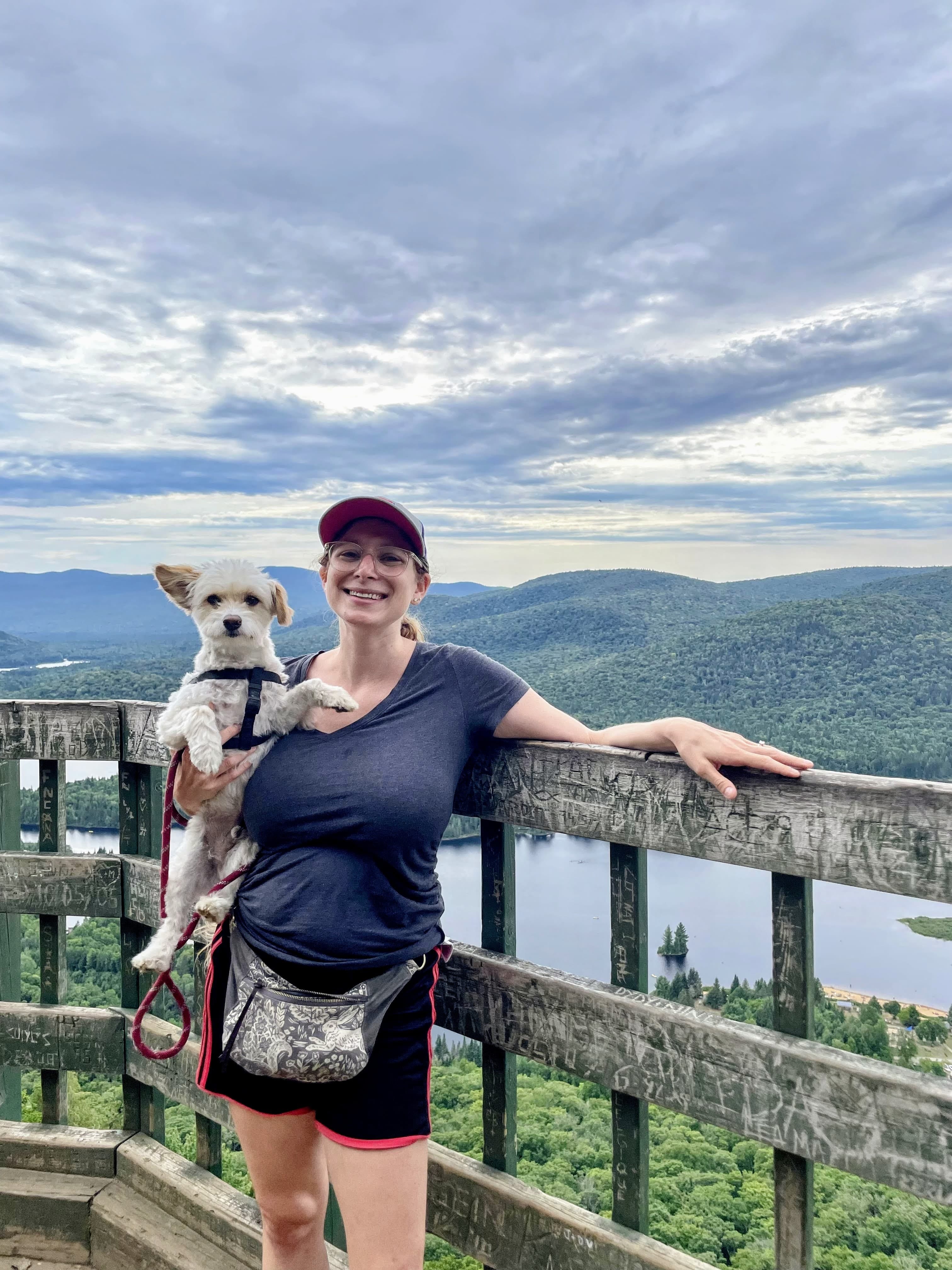
Cara Stern: Summer is finally here, and I love summer in Canada. There’s something about having four seasons that makes the summertime extra special. I find our cities really come alive with people who know that they cannot take the warmth for granted, so we’re all going to soak it up. Every year reminds me how lucky I am to live somewhere that has all four seasons, and I just can’t imagine living anywhere else.
I think there’s a lot to be optimistic about living in Canada. If you told me a few years ago that we’d be seeing citywide up-zoning to four-plexes, six-plexes, even eight-plexes in this country, I would not have believed you, but we’ve seen it happen. And we’re now seeing meaningful change on the development charge front, on the taxes applied to new homes, and these are temporary measures. But the fact that they’re happening at all shows the politicians are starting to understand how dire the housing crisis is to an extent that was just unthinkable a few years ago.
There’s a long way to go before the housing crisis is resolved, and a lot more changes that need to come to make these projects viable, not just legal on paper, but there’s progress, and it’s slow, but it’s happening, and that gives me optimism for the future.
Sean Foreman: Hello, everybody. I am Sean Foreman. I am the technical director here at Missing Middle. Happy Canada Day! What do I love about Canada? I love a lot about Canada, but something I’ve been thinking a lot about is the Canadian sense of humour.
We have created some of the funniest people on the planet, and we are proud of it. Some of our prime ministers have also been funny, some on purpose and others not so much. But I think this quality goes beyond just laughs. I think humour is connected to humility and that’s a good thing. We are a humble country.
We are certainly not the most powerful country in the world. There is a guy just south of the border who keeps reminding us of that, and we are not perfect. But that is okay, because if you are humble, you’re capable of self-reflection and you can change.
I think Canada has the potential to change for the better. And while we all love Canada, there are some things that need changing. So have a great Canada Day. Maybe you’re listening to this at a barbecue. I don’t think it’s weird to listen to a podcast at a barbecue at all. So don’t listen to your friends and have a great Canada Day.
Kelly Hoban: I’m Kelly, Missing Middle’s summer co-op student. I’m currently in university, and being originally from the United States with dual citizenship, one of the things I appreciate most about Canada is the accessibility of education here. There’s a big difference in university costs and student debt between the US and Canada, and moving here has made me see education as more attainable rather than overwhelming or out of reach.
Beyond that, I think the universities here feel very community-oriented. I’ve built a lot of close friendships since I moved here for school, and since then, Canada has stopped feeling like somewhere I visited when I was younger and started feeling more like home.
This is what makes me optimistic about Canada’s future. When people feel supported and connected to their communities, it creates a more welcoming country. While there’s always room to improve, the support and sense of community I’ve experienced living here give me hope for the future.
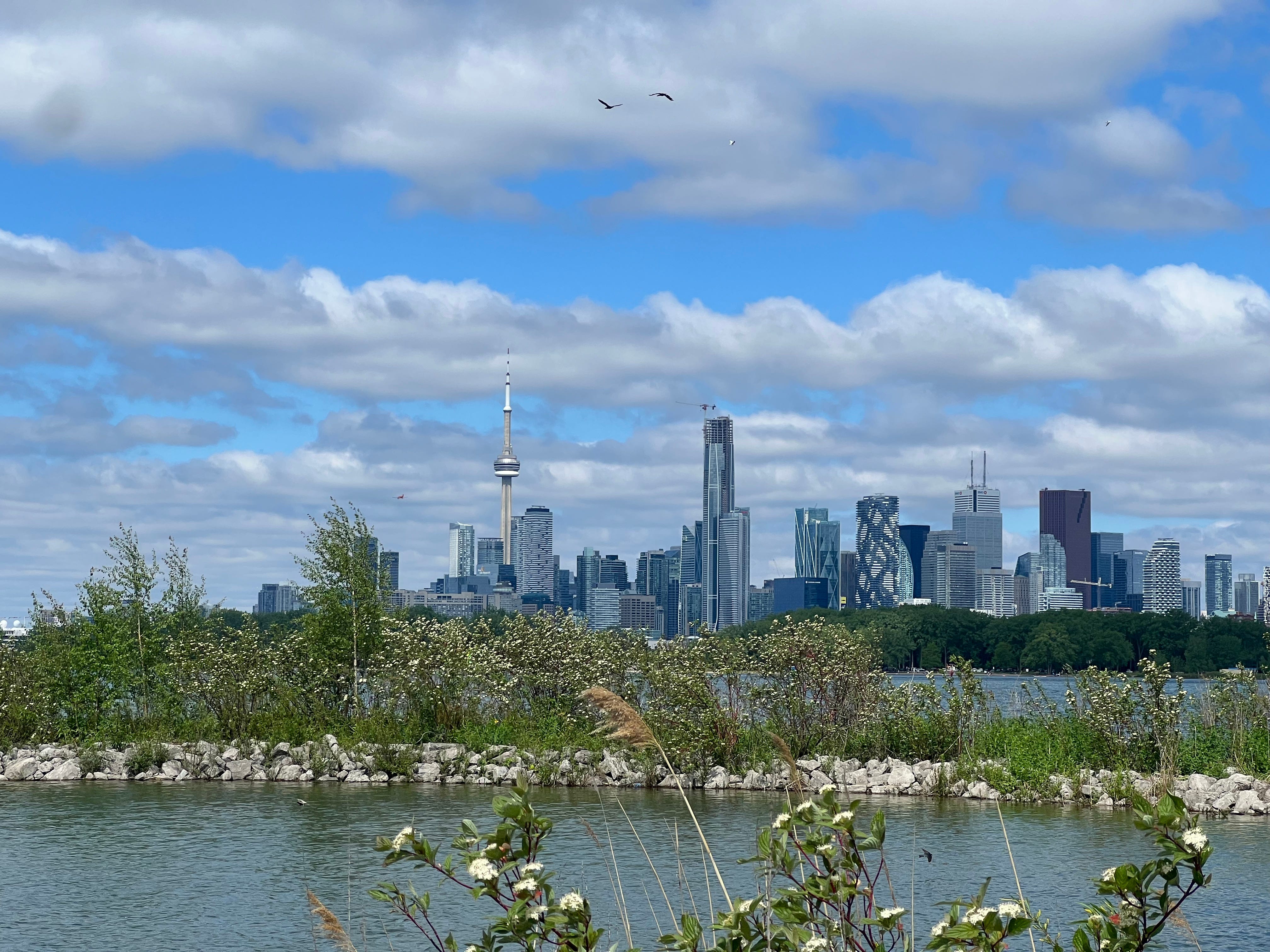
Meredith Martin: My name is Meredith Martin, and I’m the producer of the podcasts. For what I love about Canada, I’m going to go hyperlocal to Tommy Thompson Park.

Like millions of people, I took up birdwatching during the pandemic and discovered that I live very close to a migration superhighway for birds, so every spring and every fall, I get to go down and witness thousands of birds migrating into the northern and southern hemispheres. I love it. I also found out that Tommy Thompson was built out of leftover debris from the construction of the Toronto subway system, which I think is pretty wild. It was allowed to rewild over many years, and now it is a phenomenal place to spend time alone in the wilderness, and yet within the boundaries of a city that is home to over 3 million people. If you haven’t been, you should go.
In terms of what I’m feeling positive about, I am feeling positive about immigration, and I’ll explain why. I know this is a topic that we talk about a lot on this show, and some people think of us as being anti-immigrant, and that is the furthest thing from the truth. Canada is a nation of immigrants, and I feel both confident and hopeful that we can figure out a way to align our housing goals with thoughtful immigration policies, because that is how we built this country, and we do it better than anywhere else on earth.
This summer, my nephew is getting married to an Iranian woman, and three years ago, another nephew of mine got married to a woman from mainland China. So this is very personal for me. I’m now the great-aunt of a beautiful baby girl. And what could be more optimistic than babies? Let’s have more of them.
Sabrina Maddeaux: What I love most about Canada isn’t the postcard stuff. It’s something that I think gets dismissed too easily in the current conversation, which is this country’s instinct to look out for people. To try to do right by its citizens and by the world. This isn’t a marketing play. You can see it in the way we’ve shown up historically, whether that’s on the world stage as peacekeepers and mediators, when other countries weren’t willing to play that role, or in the social programs we built, because we really believe no one should fall through the floor.
There’s something in our Canadian culture, an inclination toward kindness, a baseline assumption that your neighbour’s well-being is at least partly your business. It does run pretty deep, and I don’t think we should just throw it out because it’s been taken advantage of lately or it hasn’t always been paired with the rigour it needed to actually work.
That’s really the problem right there. Good intentions without clear thinking, without urgency, without a willingness to take risks or make hard calls - that’s not real virtue. It’s just comfort. And there are two ways that comfort becomes dangerous. One is external. In an era where those good intentions can be so easily manipulated by private interests, bad actors, or the incentive structures of social media, kindness without backbone becomes a liability.
But the other way is internal, and that’s maybe even more corrosive because it turns into complacency. The belief that because we mean well, because we have good values, we’re somehow protected from the worst outcomes, that we don’t have to do the hard work because we’re already on the right side. Our Canadian values should be assets, but we’ve too often allowed them to be blind spots.
What makes me hopeful is that I think more and more Canadians are starting to understand this: holding on to our values doesn’t mean being naive about how they get used against us, or assuming they’ll save us on their own.
The work we need to do is to figure out how to actually keep what’s inherently good about Canada and its people intact while building the common sense and the spine to act smarter and faster. That’s not a small thing to figure out, but I know we’re more than capable of it, and I think the conversation is more serious than it’s ever been in my lifetime, including on The Missing Middle. So today I’m holding on to that and proud of it. Happy Canada Day!
Mike Moffatt: At the Missing Middle, we’re often critical of government policies and the people who make them. That’s not because we’re anti-Canada. It’s because we love our country. After all, dissent is the highest form of patriotism. We’ve taken positions that have made those in power uncomfortable, sometimes even angry, and we plan to keep doing it. Yet, despite being a regular thorn in their side, no one in power has ever tried to silence us. The only censorship we face is self-imposed, guided by what we believe is true, appropriate and helpful.
But what makes Canada truly remarkable isn’t just the relative lack of government censorship; it’s that those same politicians, bureaucrats, and planners that we criticize still call us. They subscribe to our Substack, they invite us to meetings, and they seek out our perspective.
They want to hear from us precisely because they don’t always agree. They see the fundamental value in well-researched, independent opinions. That open-mindedness is what makes Canada great. And I hope we never lose it.
Sabrina Maddeaux: Thank you so much for watching and listening.
Mike Moffatt: If you have any thoughts or questions about what used to be called Dominion Day, please send us an email to [email protected].
Sabrina Maddeaux: And we’ll see you next time.
Additional Reading/Listening that Helped Inform the Episode:
A History of Tommy Thompson Park
Brought to you by the Missing Middle Initiative
Funded by the Neptis Foundation